
Sheridan County Court Records After a Jail Arrest
After a Sheridan County arrest, the first local custody record is usually created through the Sheridan County Jail or the arresting agency. That booking record is not the same thing as the court record. The court record begins when the Sheridan County Attorney files a complaint, information, or other charging document. County Attorney Jamian Simmons is the local prosecutor named in the county source inventory, and the County Attorney's Office is described as the county's chief law-enforcement office for prosecuting or defending cases in which the state or county has an interest.
The practical sequence is arrest, booking, review by the County Attorney, then case filing in the court that has jurisdiction. Sheridan County Court handles misdemeanors and preliminary felony hearings. If probable cause is found in a felony preliminary hearing, the defendant may be bound over to District Court, where district criminal filings are maintained. For the custody side, use jail inmate records to confirm whether a person is still housed locally. For booking-photo questions, use jail roster mugshots. Court records after an arrest answer a different question: what charges were formally filed, what happened in court, and what the case status is now.
The official Sheridan County Attorney page identifies the charging office involved after a local jail arrest.
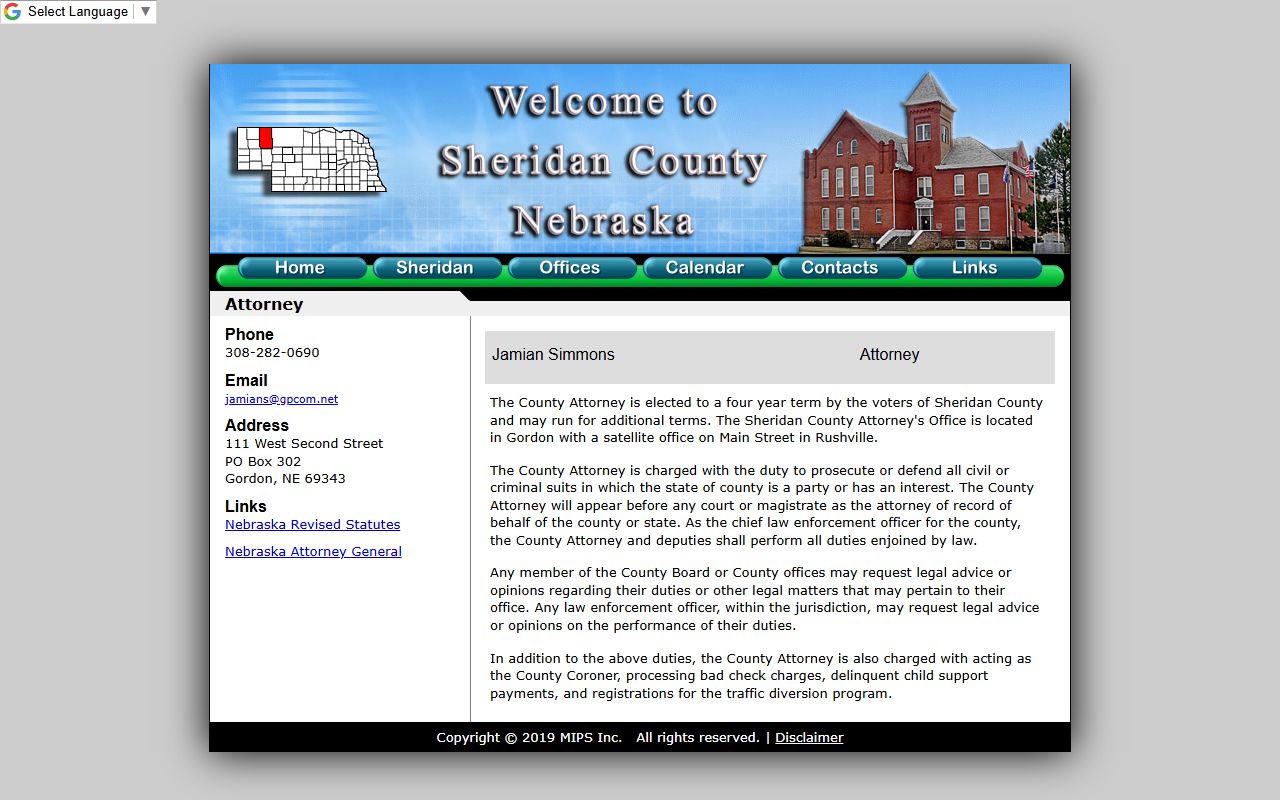
That prosecutor source matters because formal court records track filed charges, not every label used during booking or investigation.
How to Find Sheridan County Court Records After an Arrest
Nebraska's court case system is the main online source for charges filed after an arrest. The JUSTICE one-time party name search can be used when a case number is not known, and the Nebraska Judicial Branch case-information page explains the fee-based and free-access options. A one-time party name search is $17 and may lag about 24 hours after a new case is entered. Case number details are $2. Courthouse kiosks and law libraries provide free access to case information, which is useful when online fees or search limits are a concern.
- Start with custody confirmation if needed. Call the Sheridan County Jail or review jail-related records to learn the arrest date, booking agency, and whether the person was transferred.
- Search JUSTICE one-time case search by party name if the case number is unknown. Use Sheridan County when the search mode allows a county filter.
- Check County Court first for misdemeanors, traffic matters, municipal ordinance cases, and felony preliminary hearings.
- Check District Court for felony cases after bindover or direct district filing.
- Read offense information, the register of actions, bond orders, warrant entries, hearing dates, sentencing, and disposition lines before drawing a conclusion.
- If the online record is incomplete, contact the clerk for the court level involved or use a free courthouse kiosk or law library terminal.
The official JUSTICE one-time case search is the name-search entry point for users who do not yet have a Sheridan County case number.
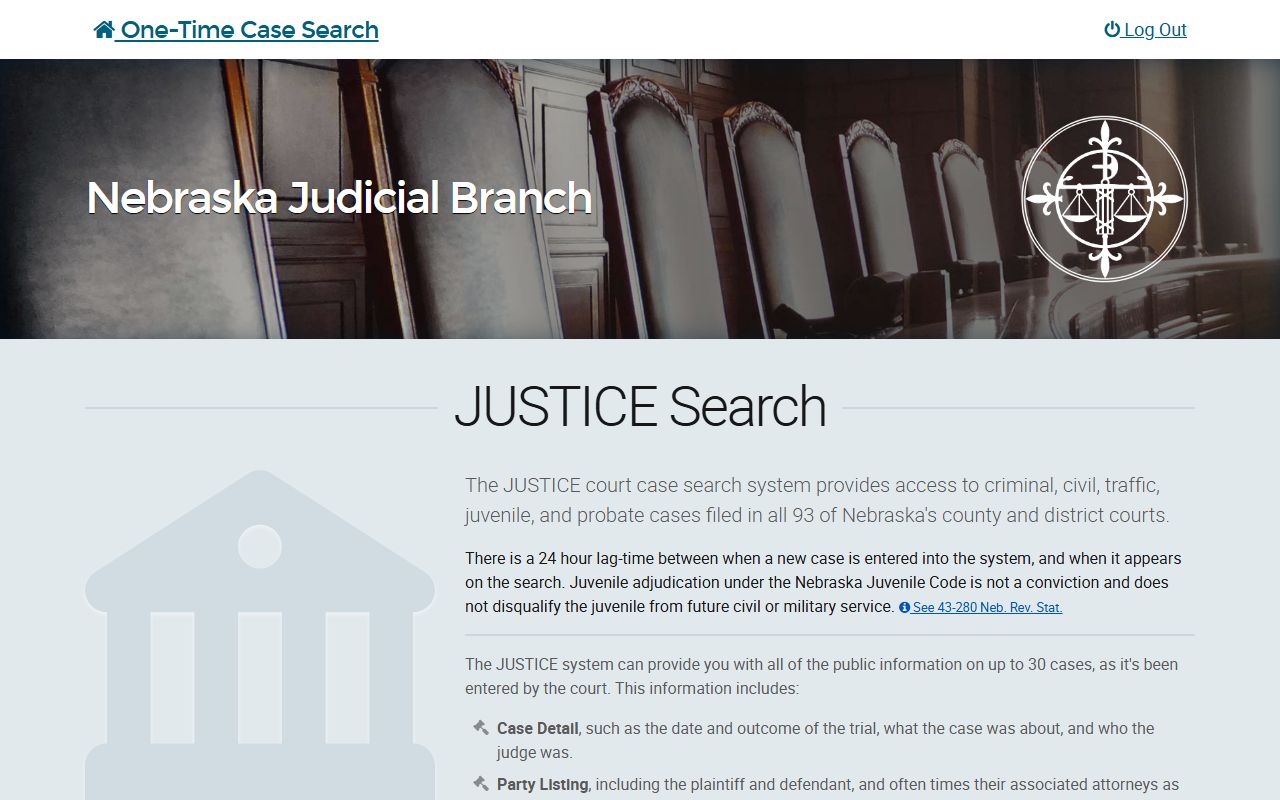
The one-time search source is useful soon after a jail arrest, but the 24-hour lag means a brand-new case may not appear immediately.
The Nebraska Judicial Branch case-information page explains the available JUSTICE search paths and what case records can show.
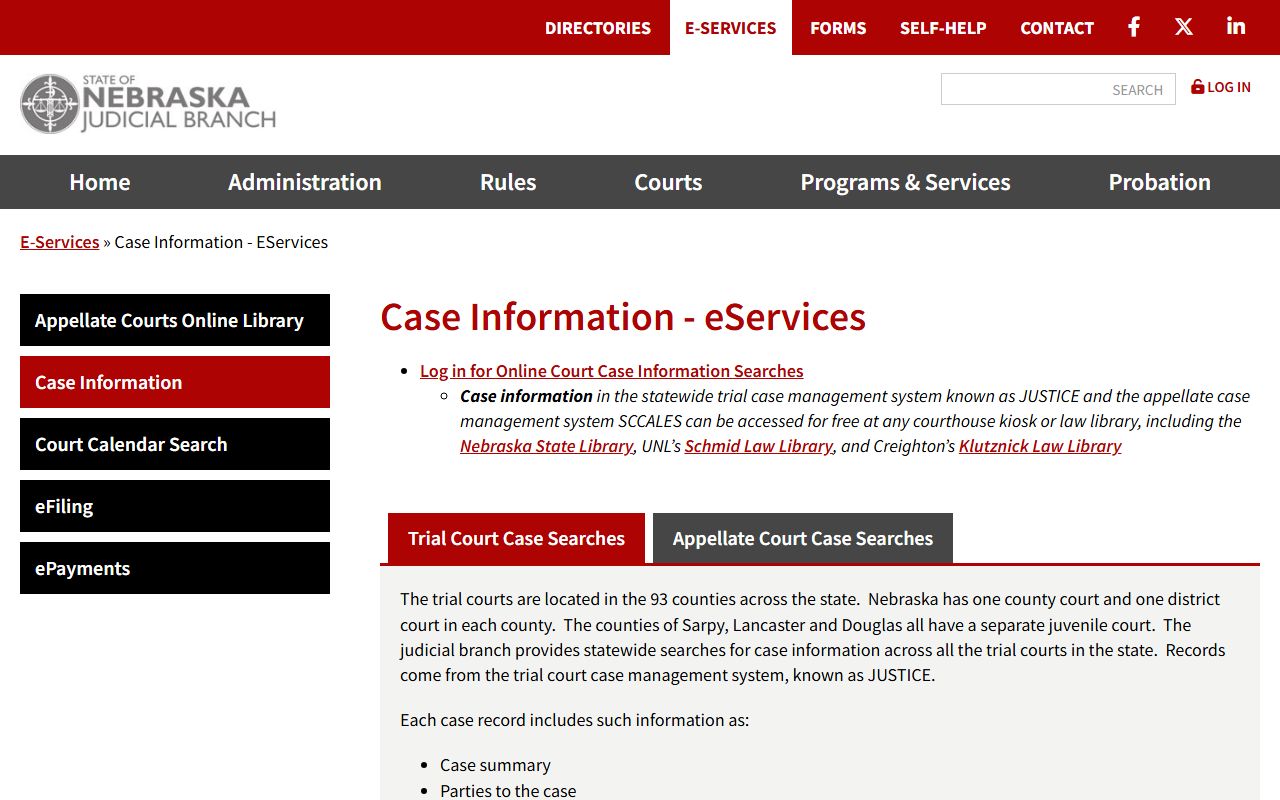
For Sheridan County court records after a jail arrest, use the case search to verify filed charges and current status rather than relying only on a booking note.
County Court, District Court, and the Prosecutor
County Court and District Court serve different roles after a Sheridan County jail arrest. County Court handles misdemeanor cases and preliminary hearings in felony cases. The official county court source names Catherine Allen as Clerk Magistrate at 303 East 2nd Street, PO Box 430, Rushville, NE 69360, phone 308-327-5656. Preliminary hearings decide whether there is probable cause for a felony to proceed. If probable cause is found, the case can move to District Court.
District Court maintains district criminal filings. The official clerk source names Carol Stouffer as Clerk of District Court, Courthouse, PO Box 581, Rushville, NE 69360, phone 308-327-5654. A felony case may therefore have County Court activity at the start and District Court activity later. The Sheridan County Attorney's Office is at 111 West Second Street, PO Box 302, Gordon, NE 69343, phone 308-282-0690, email jamians@gpcom.net. That office decides what formal complaint or charge is filed after the jail arrest materials are reviewed.
The official Sheridan County Court page describes the county court's misdemeanor and preliminary-hearing jurisdiction.
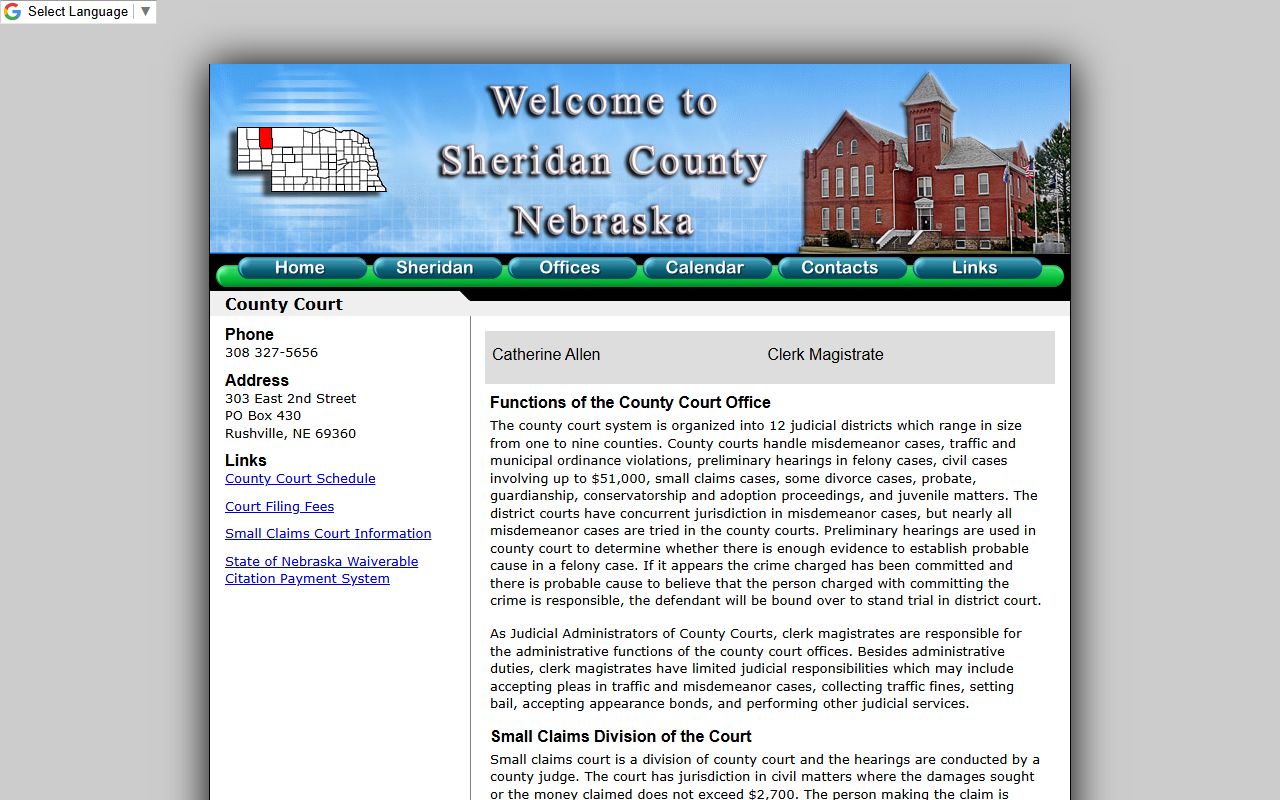
That court page is the local source to connect a jail arrest with County Court proceedings before any felony case moves forward.
The official Clerk of District Court page identifies the district filing office for felony and other district matters.
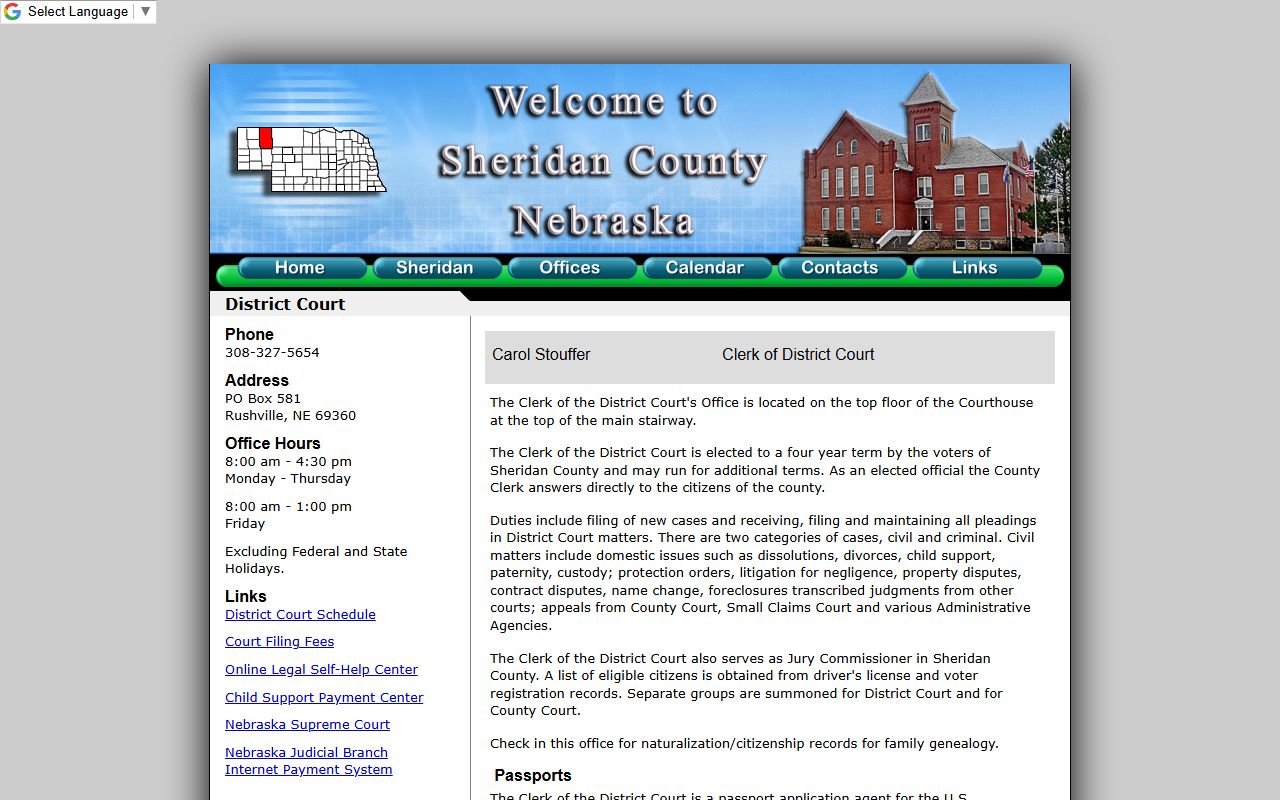
District Court records are especially important when a felony arrest has moved beyond the County Court preliminary stage.
How Charges Get Filed After an Arrest: Complaint, Information, and Indictment
Booking happens at the jail, but a court charge begins with a charging document. In many local cases, the first court document is a complaint filed after the County Attorney reviews law-enforcement reports. More serious matters may proceed through an information after preliminary proceedings, and a grand jury indictment is a separate formal charging route. The important records distinction is simple: the booking entry explains custody, while the charging document creates the court case and controls what appears in court records.
| Charging Document | Who Uses It | How It Fits After Arrest | What to Check |
|---|---|---|---|
| Complaint | County Attorney or law-enforcement supported filing | Often starts a misdemeanor case or an initial felony matter in County Court | Offense name, level, filing date, bond request, and first appearance setting |
| Information | Prosecutor | Common felony charging document after a case moves forward | Filed counts, amended counts, dismissed counts, and District Court case number |
| Indictment | Grand jury | Formal accusation route used in limited circumstances | Indicted counts, arraignment, bond, and later disposition |
Charge Status in Court Records After an Arrest
Charges may change after the first filing. A booking charge can be broader, narrower, or simply different from the formal charge selected by the prosecutor. Court records should be checked for amended charges, reduced charges, dismissed counts, acquittals, convictions, and set-aside or sealing notes. The register of actions can be just as important as the charge list because it shows filings, hearings, warrants, orders, and outcomes over time.
| Status | What It Means | Why It Matters |
|---|---|---|
| Pending | The charge remains unresolved. | Future hearings, bond conditions, or warrant activity may still affect the defendant. |
| Amended | The charge was changed by prosecutor filing or court action. | The current charge may not match the arrest label or first complaint. |
| Reduced | The charge level or offense was lowered. | Sentencing exposure, court level, and final record wording may change. |
| Dismissed | The prosecutor or court ended that charge. | A dismissed count is not a conviction, though the case record may still show the history. |
| Acquittal | A not-guilty result after trial. | The court record reflects a charge that was tried but not proved. |
| Conviction | A guilty plea, no-contest plea treated as conviction, or guilty finding. | Sentencing and criminal-history consequences may follow. |
Bond and Release After an Arrest
Sheridan County does not publish an official jail bond page, accepted payment methods, or bond-posting hours in the research sources. Bond details should be confirmed with the Sheridan County Jail or the court handling the case. County Court is the usual starting point for misdemeanors and preliminary felony matters. District Court should be checked for felony cases after bindover or district filing. A bond entry in court records does not always mean immediate release, because another agency hold, warrant, parole or probation matter, federal hold, ICE detainer, or transport status may keep the person in custody.
| Bond Type | How It Works | Sheridan County Checkpoint |
|---|---|---|
| Cash Bond | Money is posted under court or jail instructions. | Confirm who accepts payment and the payment method before travel. |
| Surety Bond | A commercial bonding company posts bond. | Nebraska permits surety practice, but the county source does not endorse specific bondsmen. |
| Personal Recognizance | Release is based on a promise to appear and obey conditions. | Confirm whether written conditions must be signed before release. |
| Conditional Release | Release may include no-contact, testing, travel, or supervision terms. | Read the court order and the register of actions for current conditions. |
| No-Bond Hold | The person is not releasable on local bond. | Ask whether a warrant, another county, parole/probation, federal, or ICE hold controls custody. |
Warrants That Lead to an Arrest
No official Sheridan County active warrant search, warrant list, most-wanted page, or app-based warrant lookup was found in the research sources. The sheriff source links to Crime Stoppers and the Nebraska State Patrol but does not provide a local searchable criminal warrant database. County board references to distress warrants are tax or treasurer context and should not be treated as criminal arrest warrants.
When a warrant results in a jail booking, officers arrest the person, transport the person to jail, complete booking, and hold the person until bond, court appearance, release order, or transfer. JUSTICE court records may show warrant-related docket events or bond settings once a criminal case exists. County Court may handle bench warrants in misdemeanor, traffic, municipal ordinance, preliminary felony, or other county-court matters. District Court may show felony bench warrants or district criminal warrant activity. The sheriff or jail can answer custody questions at 308-327-2161, but warrant clearance should not be expected by phone.
Charges vs. Convictions
An arrest and a filed charge are not the same as a conviction. A charge is an accusation placed into the court record. A conviction requires a guilty plea, a plea treated as a conviction, or a guilty finding. Court records after a jail arrest may show both the accusation and the eventual result, so the disposition line should be read before using the record to describe what happened.
| Question | Charge | Conviction |
|---|---|---|
| Case stage | Accusation filed by the prosecutor or grand jury | Final guilty result by plea or finding |
| Proof level | May begin from probable cause or prosecutor filing decision | Requires proof beyond a reasonable doubt or an accepted plea |
| Record effect | May remain visible even if dismissed unless sealed or otherwise restricted | May affect sentencing, supervision, licensing, or future criminal-history review |
| Best field to read | Offense information and charging documents | Disposition, judgment, sentence, and register of actions |
Court Calendar and Criminal History Sources
The Nebraska Multi-Court Calendar Search is a separate tool for current and future court settings. It can help identify upcoming Sheridan County Court or District Court dates, but it is not a complete substitute for the case record. Calendar results should be checked against JUSTICE case details, especially after an arrest where bond, warrant, or charge amendments may affect timing.
The official Nebraska court calendar search provides name, date, and court-type fields for upcoming court activity.
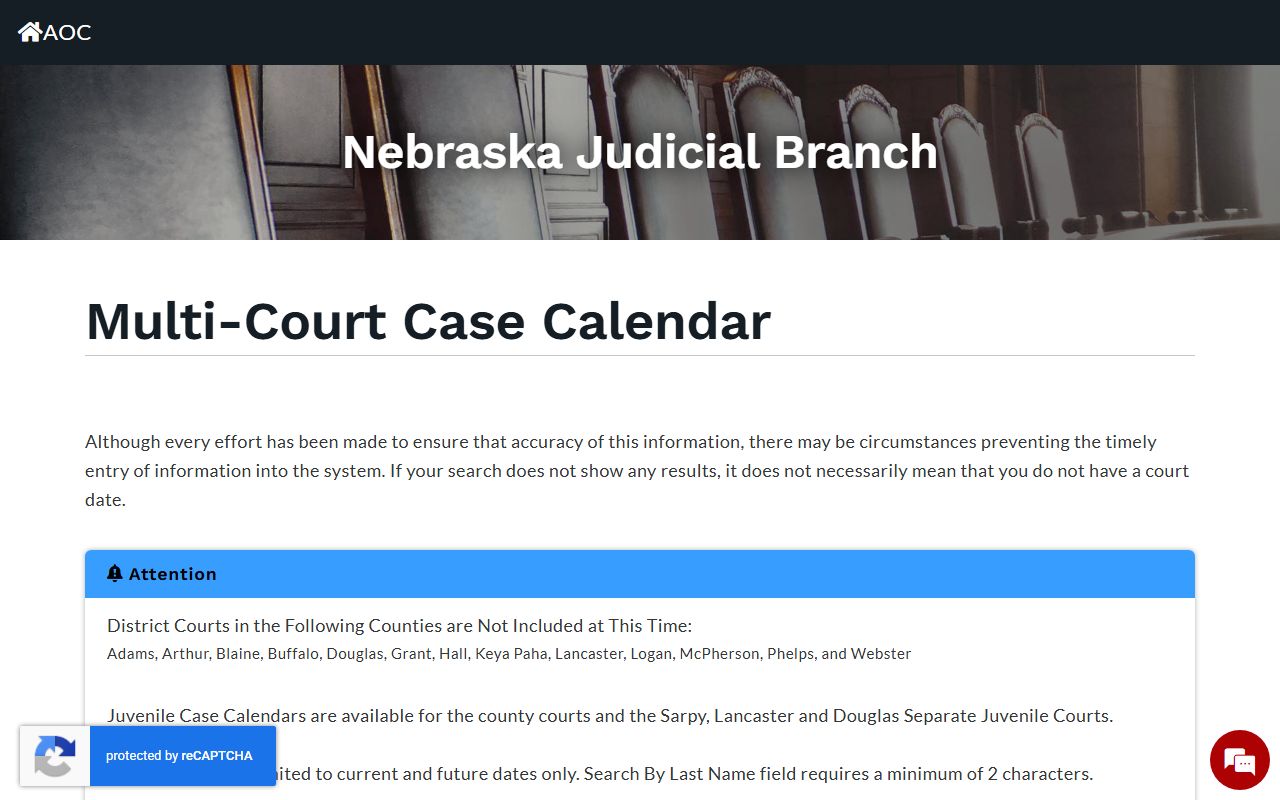
Calendar listings help locate hearings, while the case record remains the better source for charges, dispositions, and bond history.
For a broader criminal-history request, the Nebraska State Patrol RAP sheet process is separate from court case lookup. A RAP sheet may include Nebraska arrests where the person was fingerprinted and resulting dispositions. It does not replace the court file, and it is not a live active-warrant search. Court records after a jail arrest, State Patrol criminal-history records, and jail custody records each answer different record questions.
Sealed vs. Expunged or Set Aside Arrest Records
Nebraska sources distinguish between sealing, expungement effects, and set-aside relief. A sealed record is removed from ordinary public view, but the Judicial Branch source explains that the person, authorized recipients, and criminal justice agencies may still have access in allowed situations. A set aside may address eligible convictions and civil disabilities, but it does not necessarily erase every historical reference. Expungement language in Nebraska criminal-history law is tied to statutory limits and should not be assumed to mean every court, jail, or agency record disappears.
| Record Action | Public Visibility | Continuing Access | Practical Limit |
|---|---|---|---|
| Sealed | Generally hidden from public view after a qualifying order. | The person, authorized recipients, and criminal justice agencies may still see it. | Sealing is not the same as destroying the record. |
| Expunged | Access is restricted according to the statute that applies. | Some official uses may remain depending on the record and law. | Do not assume every public or agency reference is automatically removed. |
| Set Aside | The conviction may be set aside if eligible and ordered. | The historical case record may still show what occurred. | It can reduce legal consequences without making the case invisible in every context. |
Background Check Considerations
Court records after a jail arrest are public-record research materials, not a shortcut for regulated screening. Employment, housing, credit, insurance, and similar decisions can trigger federal and state consumer-reporting rules. A casual case lookup may show a charge without enough context, especially if the case was dismissed, amended, sealed, set aside, or still pending. For formal screening, use lawful consumer-reporting channels and verify the final court disposition with the originating court.
Important: Public case lookup information is not a consumer report and should not be used for FCRA-covered screening decisions.
Restricted Court Records After an Arrest in Sheridan County
Nebraska public-records law begins with broad access to public records, but specific records can be withheld, redacted, sealed, or treated as nonpublic. Juvenile records, active investigative material, security-sensitive information, medical information, certain criminal-history details, sealed records, and protected personal information may be limited. For formal charges, use JUSTICE or the clerk's office because the court charge record is separate from the sheriff's booking record. For non-court jail material that is not online, the sheriff is the likely records custodian, subject to Nebraska public-records exceptions and response procedures.